
PDA parenting: finding autonomy in the small stuff
Oct 09, 2026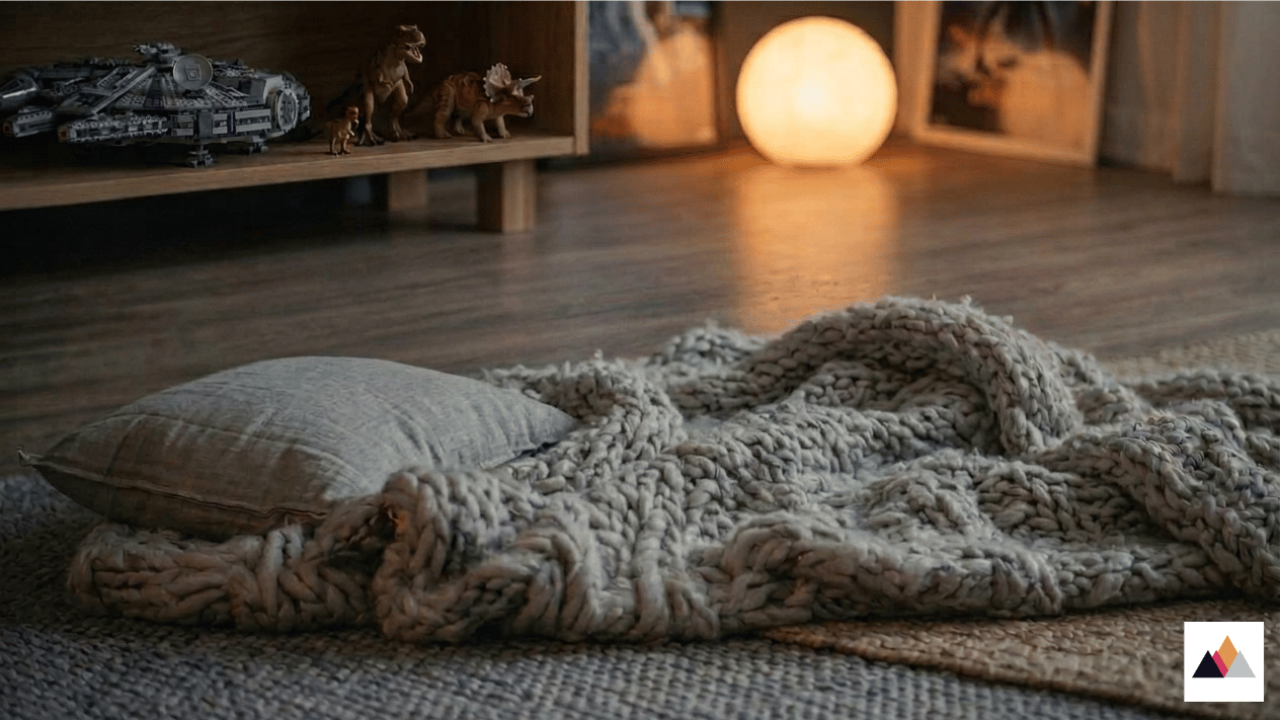
For parents of children with pathological demand avoidance (PDA), some of the autonomy we withhold has nothing to do with health or safety. It is about how things are “supposed” to look.
Here is why questioning those norms is the best place to start, and what a floor nest taught me about it.
* * *
When Cooper, my older PDA son, was about six, he announced that he wanted to sleep on the floor instead of in his bed.
I resisted. I was sure it would be uncomfortable and that he would wake us up more at night. He had a perfectly good bunk bed. Instead, he wanted a nest of blankets on the hard floor, tucked behind a dresser we had moved and turned into a cozy spot.
💡 This was right when I was starting to understand that supporting PDA is less about lowering every demand, and more about offering autonomy and equality.
So I said yes.
For the next six months, Cooper slept comfortably in the spot he chose, even though it looked unconventional and irrational to me.
Over the next year or so, he iterated on his sleeping spot a few times: moving the dresser, changing the location, layering different combinations of blankets. As I dropped my expectations of how sleep “should” look, I watched his need for control, novelty, and dopamine unfold in front of me.
In the end, he moved himself back to his bunk bed, far more regulated around sleep and bedtime than he had been a year earlier.
I share this because when parents first shift toward an autonomy-based lens, black‑and‑white thinking often kicks in.
We go from zero to 100 and assume that more autonomy and equality means:
- We can never set boundaries again
- They will never go to school for the rest of their lives
- We have to let them watch screens 24/7 forever
And I get it.
Parenting a PDA or suspected PDA child or teen means being scared and stressed much of the time.
You are trying to make transformational change in your home while going against conventional wisdom, often while being judged and blamed for your child or teen’s challenges.
But what if, instead of starting with the biggest fears (screens, school, siblings), you started by looking for smaller places where you are blocking autonomy because of fear or norms, not because of health, safety, or well-being?
The truth is, I was resisting the floor nest not because it was harmful, but because “that’s not how people usually sleep.”
There are many areas like this:
- Letting them eat a snack in the bath
- Letting them wear only pajamas for a year
- Brushing their teeth for them in bed and letting them spit in a cup
- Letting them learn to ride a bike when they are ready, years after peers
- Letting them text, send memes, or write notes instead of speaking
- Letting them sleep with the lights on
When you shift into an experimental mindset – hypothesize, test, collect data, decide – you can use your own objectivity to walk alongside your fear, without judging yourself.
Any real change brings uncertainty. Yes, there is a chance things feel worse for a while. There is also a chance they get better than you imagined. 🪷
Finally, you do not have to start with the biggest, scariest area. One tiny, low-stakes experiment still “counts” as real change.
What is one small thing you could shift this week to offer your PDA or suspected PDA child or teen a little more real autonomy, in a place that is about norms rather than safety?
The permission you’ve been waiting for is already here.
Want my blog posts in your inbox?
Most weeks we send two emails. You can unsubscribe any time.
